
Quick Navigation
- Introduction
- What is the Anaerobic Threshold?
- Free Lactate Testing eBook
- How to find the Anaerobic Threshold?
- Do all sports train the Anaerobic system?
- What is the difference between Anaerobic Threshold, MLSS, and CP?
- How can we track changes over time?
- How much is the Anaerobic Threshold supposed to change over time?
- What types of workouts can I do to improve my anaerobic threshold?
- Sample Anaerobic threshold workouts!
- Health Benefits of Anaerobic Training
- Conclusion
- Additional resources
- About the author
- References
Have you ever felt a nagging ache that just won’t go away - even though you haven’t had a specific injury? That’s often how overuse injuries start. The signs of overuse injuries can be subtle at first, but when ignored, they can snowball into long-term pain or time away from the activities you love.
The good news? Catching overuse injury symptoms early can make recovery faster and far less frustrating.
At Vital Performance Care in Calgary, we see this pattern every day - busy professionals, active runners, gym-goers, and weekend warriors all pushing through discomfort, not realizing their body is asking for help.
Let’s break it down.
What Are Overuse Injuries?
Overuse injuries happen when the same muscles, tendons, joints, or tissues are stressed repeatedly without enough time to recover. Unlike sudden injuries (like a sprain or fall), overuse injuries build gradually.
Think:
- Repeating the same movement at work
- Increasing training volume too quickly
- Poor posture or movement mechanics
- Skipping rest days because “it’s probably fine”
Spoiler alert: it’s usually not fine.
A Quick Personal Note (and Why I Care About This Topic)
I want to pause here for a second - because this topic isn’t just academic for me.
I’m an exercise physiologist, not a physiotherapist or chiropractor, and I’ve spent most of my career helping people train, perform, and stay active long-term. And despite knowing a lot about load management, I still ignored my own warning signs.
In 2024, I dealt with multiple nagging tendon issues - Achilles, hamstring, and hip tendons - the kind that don’t feel “bad enough” to stop you, but never fully go away either. I did what many driven people do: trained around them, hoped rest would fix it, and told myself it was just part of being active.
It wasn’t.
What finally changed things wasn’t stopping movement - it was understanding why my body was reacting the way it was, and learning how to reload tissues properly instead of constantly irritating them.
Common Signs of Overuse Injuries You Shouldn’t Ignore
Here are the most common overuse injury symptoms to watch for:
1. Pain That Builds Slowly Over Time
This is the classic red flag. It often:
- Starts as mild discomfort or an ache
- Feels worse during or after activity
- Gradually shows up earlier and lasts longer
If the pain or ache keeps returning, that’s one of the clearest signs of overuse injuries.
2. Stiffness or Tightness That Doesn’t Resolve
Morning stiffness, post-work tightness, or joints that feel “rusty” can all signal tissue overload - especially if stretching only helps temporarily.
3. Swelling or Tenderness
Overworked tissues often become inflamed. You might notice:
- Local swelling
- Warmth
- Pain when pressing on a specific area (like a tendon or joint)
This is your body’s way of saying, “I need recovery and better loading.”
4. Reduced Strength or Endurance
If everyday tasks suddenly feel harder - or your performance drops without explanation - it’s often due to cumulative overload rather than weakness alone.
5. Pain With Repetitive Movements
Typing, lifting, running, squatting, or even walking can trigger symptoms when tissues are irritated from repetition.
Notably, joint pain, back pain, and neck pain are among the most commonly reported symptoms in Canadians - many tied directly to overuse patterns.
6. Pain That Improves With Rest but Returns Quickly
Resting for a few days might help, but symptoms come roaring back as soon as activity resumes. This cycle is a classic sign that the issue isn’t healed - just paused.
Common Overuse Injuries You Might Recognize
Some familiar conditions linked to overuse include:
- Tendinopathies (Achilles, rotator cuff, patellar tendon pain also known as runner’s or jumper’s knee)
- Tennis or golfer’s elbow
- Bottom of the foot (plantar) or heel pain
- Low back or neck pain from prolonged sitting or repetitive tasks
Many of these start quietly and progress if left unchecked.
Why Ignoring Overuse Injury Symptoms Is Risky
Pushing through pain doesn’t build resilience - it often leads to:
- Longer recovery times
- Chronic pain patterns
- Compensations that create new injuries
- Time away from work, sport, or daily activities
Overuse injuries respond best when addressed early with the right balance of movement, loading, and recovery.
Pain Going Away Doesn’t Mean the Problem Is Solved
One of the biggest lessons I learned during my own tendon rehab is this:
Symptoms settling down doesn’t mean the tissue is ready for full load again.
Overuse injuries - especially tendon-related ones - often calm down with rest, reduced training, or short-term treatment. That’s where a lot of people get stuck. They feel better, return to normal activity, and then wonder why the pain keeps coming back.
In most cases, the tissue simply hasn’t rebuilt enough capacity yet.
Tendons, in particular, adapt slowly. They don’t respond well to the cycle of flare up → rest → repeat. They respond to progressive, well-planned loading, paired with enough recovery.
I break this down in much more detail in a blog I wrote after rehabbing my own tendons:
👉 16 Key Things You Need to Know About Tendons in 2025 (If You’re Injured)
If your “overuse injury” feels stubborn, recurring, or confusing - there’s a good chance tendon health and load management are part of the story.
How Physiotherapy Helps Overuse Injuries
At Vital Performance Care in Calgary, physiotherapy focuses on more than symptom relief. Your care is built around:
- Identifying the root cause (movement, load, posture, or training errors)
- Gradually reloading tissues so they adapt - not flare up
- Improving strength, mobility, and movement efficiency
- Helping you return to activity confidently, not cautiously
You don’t need to “stop everything” - you need a smarter plan.
Where Exercise Physiology Fits In (and Why Team Care Matters)
This is also where having the right team around you matters.
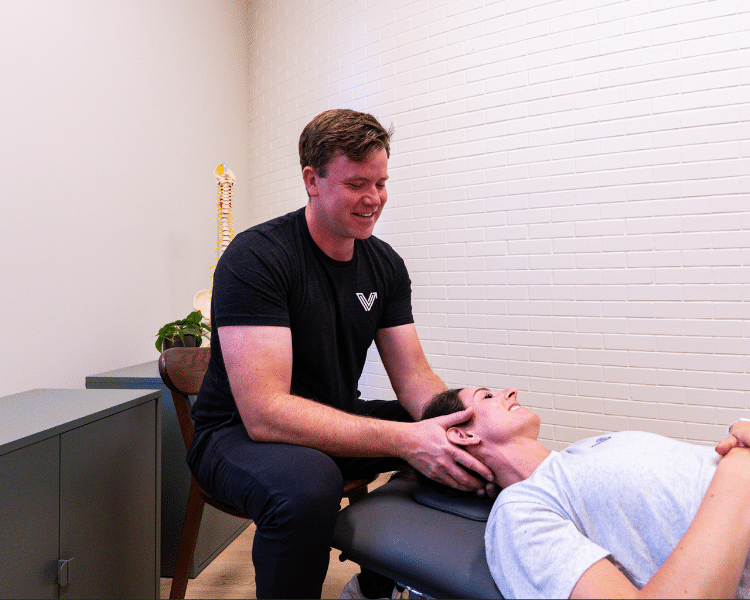
Physiotherapy and chiropractic care are often essential early on - especially for assessment, manual therapy, and helping calm symptoms. That was true for me as well.
But long-term resolution of overuse injuries usually comes down to how tissues are loaded over time - not just how they feel on the treatment table.
That’s where exercise physiology and strength & conditioning come in:
- Rebuilding tissue capacity gradually
- Matching load to where your body is right now
- Progressing strength, endurance, and movement tolerance so you’re not stuck in a flare-up loop
During my own rehab, I leaned heavily on our team - physiotherapists, chiropractors, and coaches - each playing a different role at different stages. That integrated approach is exactly how we help clients navigate overuse injuries at Vital Performance Care.
When Should You Get Help?
If you’ve noticed:
- Pain lasting more than 1–2 weeks
- Repeated flare-ups with activity
- Stiffness, weakness, or swelling that won’t settle
- “Aches” that won’t go away
…it’s time to get it checked.
Early manual therapy (chiropractic or physiotherapy) can mean the difference between a short reset and months of frustration.
Final Takeaway
Your body is incredibly good at sending signals - overuse injury symptoms are simply messages asking for attention. Listening early keeps small issues from becoming long-term problems.
If you’re noticing the signs of overuse injuries, the team at Vital Performance Care in Calgary, AB is here to help you move better, recover faster, and stay active without fear.
Your body isn’t broken - it’s just asking for the right support.