
Exercises
Explore our Exercises archive for a comprehensive collection of routines, mobility drills, and strength-building movements. Our articles provide clear instructions and expert recommendations to help you move better and achieve your goals.
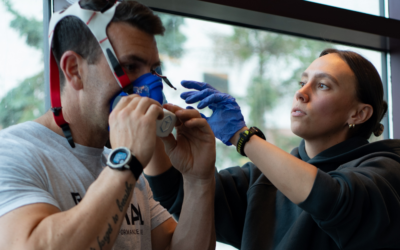
Want to Test More Than Just Your Fitness? Calgary’s Most Comprehensive Testing Battery Is Here
Tennis elbow (lateral epicondylalgia) is one of the most common – and most mismanaged – tendon injuries. Exercise Physiologist [Name] breaks down what the evidence actually says about injections and passive treatments, how to use a pain scale to guide your training, and the exact 3-stage rehab protocol used to rebuild elbow, wrist, and forearm tendon capacity.

Here’s Exactly How I Would Rehab a Tennis Elbow: Perspective of an Exercise Physiologist
Tennis elbow (lateral epicondylalgia) is one of the most common – and most mismanaged – tendon injuries. Exercise Physiologist [Name] breaks down what the evidence actually says about injections and passive treatments, how to use a pain scale to guide your training, and the exact 3-stage rehab protocol used to rebuild elbow, wrist, and forearm tendon capacity.

VO₂max vs. Submaximal Testing in Calgary
You’ve probably heard the term VO₂max thrown around in running groups, fitness apps, and endurance communities. It’s the gold standard for measuring aerobic capacity — the highest amount of oxygen your body can consume and use during intense exercise. But here’s a question most people don’t ask: do you actually need to go all-out to get meaningful fitness data?

Why Your Bones Need More Attention During Perimenopause and Beyond

GLP-1 Users Need This Workout Guide: An Exercise Physiologist’s Perspective
If you’re taking a GLP-1 – Ozempic, Wegovy, Mounjaro, Zepbound – and you’ve felt smaller but also a little weaker, you’re not imagining it.
The medications work — really well, in fact — but the scale doesn’t tell you what kind of weight you’re losing. In the landmark STEP 1 trial of semaglutide, about 39% of the weight lost was lean body mass, not fat (Wilding et al., 2021). For tirzepatide in SURMOUNT-1, it was around 25% (Jastreboff et al., 2022). Translation: out of every 10 kg you lose, somewhere between 2.5 and 4 kg is muscle, bone, and connective tissue — unless you train to protect it.
Plantar Fasciitis in Calgary: Why It Strikes in Spring & the Approach That Actually Works
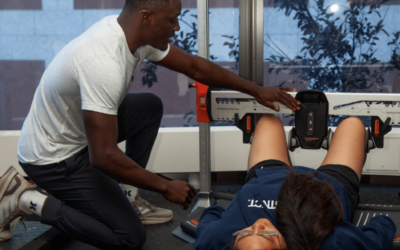
What Does a Kinesiologist in Calgary Do?
Ever feel like your body is holding you back – whether it’s that lingering knee twinge during runs around Nose Hill, back stiffness from long desk days, or just hitting a frustrating plateau in your training? In a city like Calgary, where we’re all chasing trails, slopes, or gym PRs, many people assume “just train harder” or “see a physio” is the fix. But what if the real key is someone who truly understands human movement at a deeper level?
That’s where a kinesiologist in Calgary comes in.

Stop Foot Arch Pain from Derailing Your Running
Foot arch pain can sideline even the most dedicated runners—but it doesn’t have to. Whether it’s plantar fasciitis, tight calves, or something more serious like a stress fracture, understanding the root cause is key. In this post, we break down the most common reasons for arch pain and what actually works to fix them—based on real cases and current research. If you’ve tried new shoes, rest, or orthotics without relief, this is for you.

The Importance of Hip Mobility for Athletic Performance
Tight hips are stealing power from your sprints, cutting inches off your jumps, and putting your body at risk every time you train. But with focused hip mobility work, you’ll feel the difference in every stride, lift, and cut—more power, smoother movement, and fewer injuries.