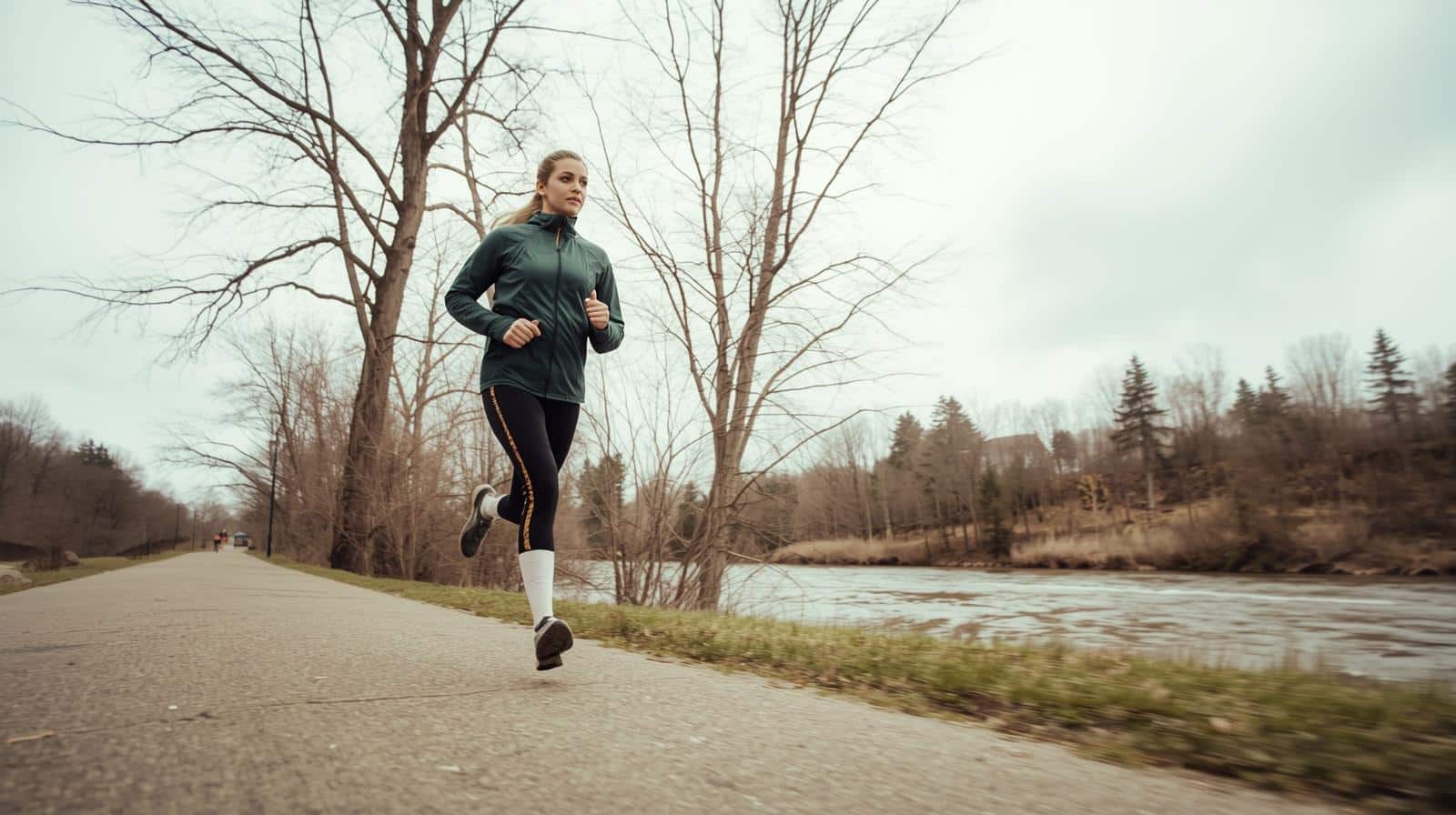
The Bow River pathway clears of ice. The path around Glenmore Reservoir finally looks runnable. Your favourite trail shoes have been sitting by the door since February. And then - the moment you push off for your first real run of the year - a sharp, stabbing pain in your heel or arch stops you cold.
Welcome to spring in Calgary, and one of the most predictable injury patterns we see at Vital Performance Care.
Plantar fasciitis is the single most common cause of heel pain in active adults. And every year, as Calgarians shake off a long winter and ramp back up into running, hiking, golf, and outdoor training, we see a reliable surge of new cases. The good news: this is not a condition you simply have to manage. With the right approach, it resolves - and it stays resolved.
This article breaks down why plantar fasciitis flares in spring, why most treatments fall short, and what a truly individualized training-and-rehab approach actually looks like.
What Is Plantar Fasciitis, Really?
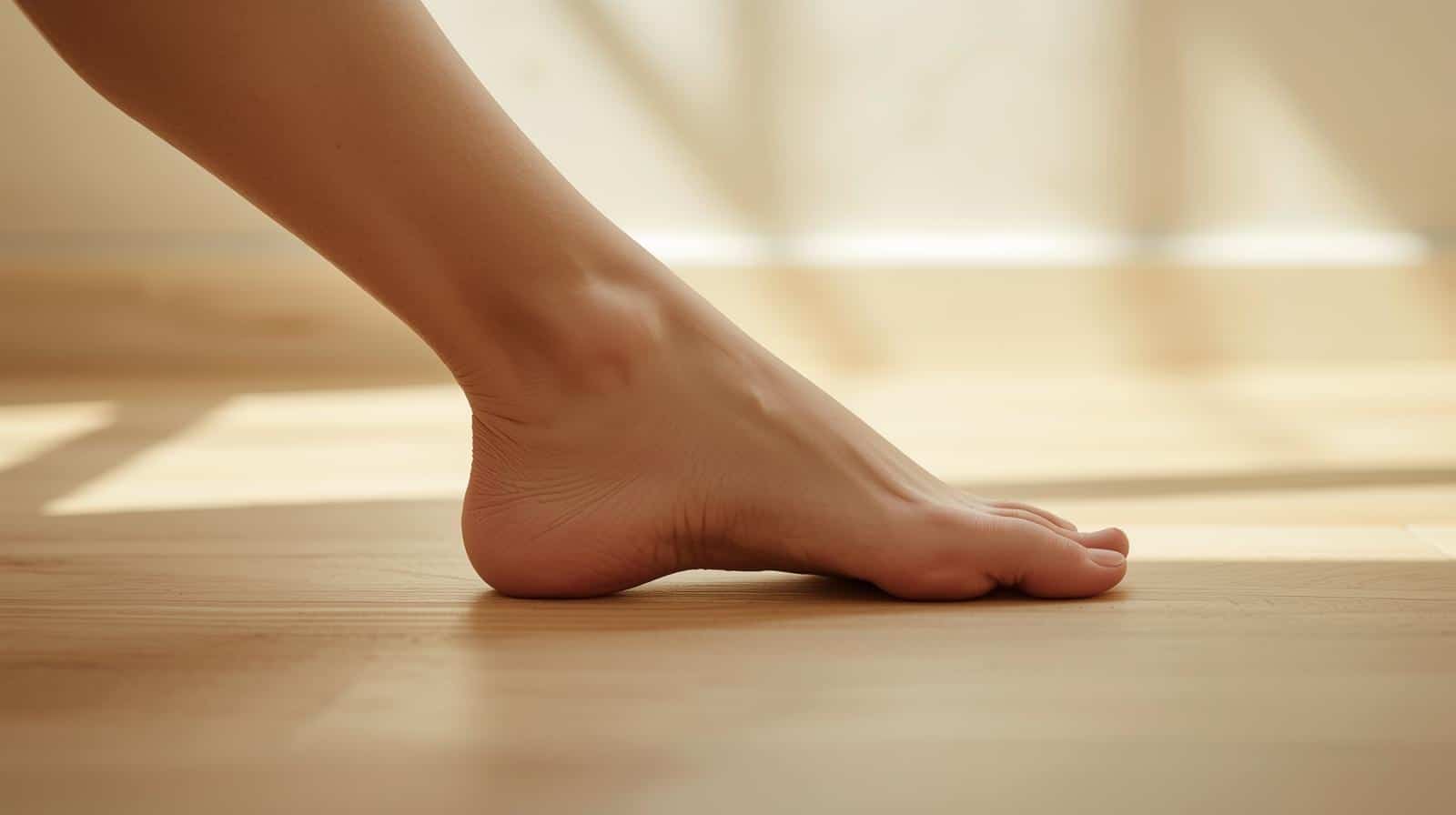
The plantar fascia is a thick band of connective tissue running along the bottom of your foot, connecting your heel bone to your toes. It plays a critical role in absorbing load, supporting your arch, and propelling you forward with every step.
Plantar fasciitis - technically more of a plantar fasciopathy, as we now know it involves tissue degeneration rather than pure inflammation - occurs when the fascia is repeatedly loaded beyond its current capacity to recover. The result is microdamage to the tissue, most commonly at the heel attachment, producing that unmistakable first-step-of-the-morning agony.
Common Symptoms
Sharp or burning heel pain, worst with the first steps in the morning
Pain that eases after a few minutes of walking, then returns after prolonged activity
Tenderness along the arch or at the base of the heel
Stiffness after sitting for extended periods
If this sounds familiar, you're not alone. Studies suggest plantar fasciitis accounts for roughly 10% of all running-related injuries - and it's not exclusive to runners. We see it in executives logging 15,000 daily steps on hard floors, parents chasing kids around soccer fields, and weekend warriors picking their activity back up after a long, cold Calgary winter.
Why Spring in Calgary Is Prime Season for Heel Pain
Calgary's climate creates a near-perfect storm for plantar fasciitis every March and April. Here's what's actually happening:
1. Abrupt Increases in Load
After months of reduced outdoor activity, shortened stride patterns on treadmills, or simply less movement overall, your plantar fascia has adapted to a lower training demand. The moment you dramatically increase volume - longer walks, daily runs, hikes up the escarpment - you're asking the tissue to handle a load it hasn't been conditioned for. The fascia doesn't fail immediately; it fails after a week or two of accumulated stress, right when spring enthusiasm is at its peak.
2. Transitioning Footwear
Heavy winter boots provide significant heel cushioning and restrict the foot's natural movement. Shifting abruptly into minimalist trail shoes, flats, or even just lighter running shoes changes the mechanical demand placed on the fascia dramatically. This transition, especially when rushed, is one of the most underappreciated risk factors we encounter.
3. Cold Muscles and Stiff Tissue
Even as temperatures rise, early spring mornings in Calgary can still hover near freezing. Connective tissue is less pliable in the cold, and if you're heading out for that first long run before your body has properly warmed up, the plantar fascia is under elevated strain from the first step.
4. Deconditioning of the Foot and Calf Complex
Winter typically means less single-leg balance work, less varied terrain, and less intrinsic foot muscle activation. The calf complex - gastrocnemius and soleus - and the smaller intrinsic muscles of the foot play a massive role in controlling pronation and managing fascial load. When these are underprepared heading into a high-demand spring, the fascia compensates. Over time, that compensation becomes painful.
The Problem With Most Treatments (And Why You've Tried Everything)
If you've dealt with plantar fasciitis before, you've probably been down this road: rest, ice, stretch the calf, roll the foot on a frozen water bottle, buy new orthotics, try a night splint. Some of these strategies have value. Most, on their own, don't fix the problem.
Here's why:
Rest reduces pain but does nothing to address the tissue's load tolerance or the biomechanical drivers that caused the issue in the first place. The moment you return to activity, it comes back.
Generic calf stretching can help, but the research is clear that passive stretching alone is far less effective than progressive loading of the tissue.
Orthotics can reduce symptom load in the short term, but they don't build the strength and movement capacity needed for long-term resolution. Plus, orthotics can make the foot intrinsic muscles smaller and weaker over time as the foot is forced to do less work than usual.
Cortisone injections may provide short-term relief but have been shown to weaken fascial tissue with repeated use and do not address the root cause. The short term trade off is not usually worth the long term destruction.
The pattern we see most often at Vital: someone has tried several of these solutions, gotten partial or temporary relief, and eventually resigned themselves to managing the pain rather than resolving it. Sound familiar? You're not annoying. You're complex - and you deserve a plan that treats you that way.
The Vital Approach: Training-Led Rehab That Lasts
At Vital Performance Care, we don't separate training from rehab. That distinction - treat the injury, then hand off to a trainer - is exactly where most programs break down.
Our approach starts with understanding you: your history, your goals, your movement patterns, and the specific demands your life places on your body. Our trainers often consult with our clinicians and vice versa - the partnership we believe is “vital”. From there, we build a plan that does three things simultaneously:
1. Progressively Load the Plantar Fascia
The most evidence-supported treatment for plantar fasciopathy is progressive tendon and fascial loading. Heavy slow resistance (HSR) protocols - particularly loaded calf raises and foot intrinsic strength training performed through full range of motion - have been shown in multiple studies to produce superior long-term outcomes compared to stretching alone. We individualize the load, tempo, and progression based on where you are right now, not where a generic protocol assumes you should be.
2. Address the Full Chain
Plantar fasciitis rarely exists in isolation. We assess ankle dorsiflexion mobility, calf complex strength, hip stability, and overall movement mechanics. Often, restrictions or weakness upstream - at the hip or even the thoracic spine - are contributing to how load is distributed through the foot. Our collaborative team means the physio, kinesiologist, and trainer are all looking at the same picture.
3. Rebuild Your Capacity for the Activities You Love
Our goal isn't to get you pain-free in the clinic. It's to get you back to the Bow River pathway, your golf game, or the mountain trail - and to build the physical resilience to stay there. That means your training plan evolves as you heal, rather than stopping the moment symptoms resolve.
Key Exercises & Training Principles for Plantar Fasciitis
These are general principles backed by current evidence. A proper individualized assessment will determine what's right for you specifically.
Heavy Slow Calf Raise
Standing on the edge of a step, perform slow, controlled calf raises through full range - 3 seconds up, 3 seconds down. Start double-leg, progress to single-leg as tolerated. Research by Rathleff et al. demonstrated significantly better outcomes with this protocol compared to stretching alone. Aim for sets of 12–15 with meaningful load (bodyweight is usually enough to start).
Intrinsic Foot Strengthening
Short foot exercises, toe spreading, and single-leg balance work on varied surfaces all help rebuild the capacity of the foot's intrinsic muscles - the ones that take load off the fascia. These are low-drama exercises that are easy to undervalue and easy to skip. Don't.
Mobility, Not Just Stretching
Ankle dorsiflexion restrictions directly increase fascial load. Targeted mobility work - not passive calf stretching, but active, loaded mobility - makes a meaningful difference. We assess and address this as part of every plantar fasciitis case.
Load Management: The Non-Negotiable
The training error that keeps plantar fasciitis lingering is the cycle of rest-until-it-feels-better, then-do-too-much. We teach clients to manage training load intelligently - how to stay active while the tissue recovers, what metrics to track, and how to progress without constantly re-aggravating.
Foot Foundations: A Complete Program for Plantar Fasciitis
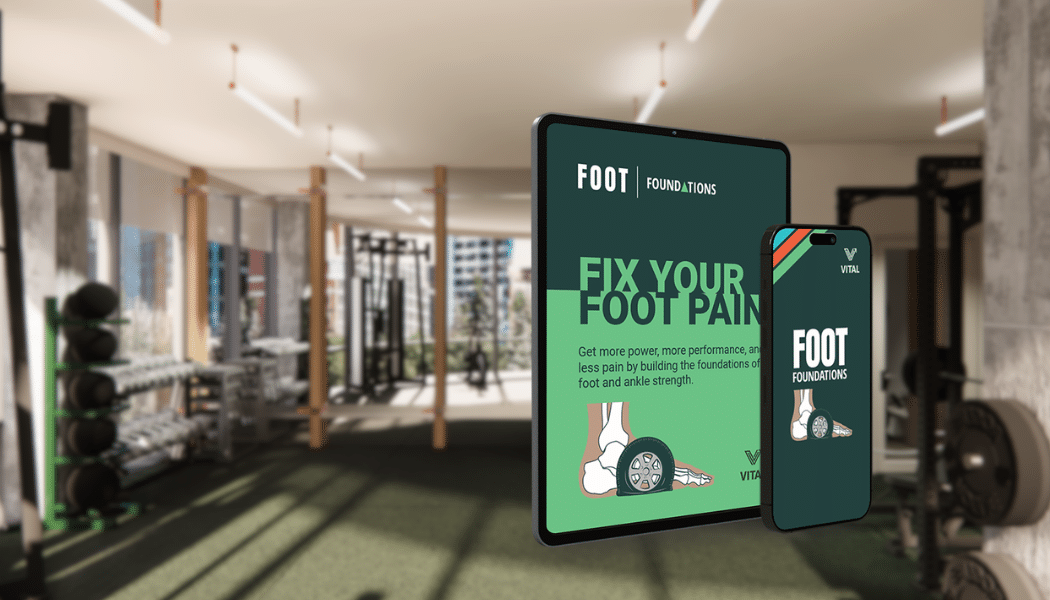
If you're looking for a structured, evidence-based program you can work through on your own schedule - or alongside in-person care - Vital's Foot Foundations program was built exactly for this.
Foot Foundations is a 12-week remote program (3 strength days + 1 mobility day per week) developed collaboratively by Carla Robbins (Exercise Physiologist) and Nicholas Simpson (Strength & Conditioning Coach) and with the help of a physiotherapist. It includes pre- and post-testing so you can track real progress, not just how you feel on a given day.
The program was designed specifically for people dealing with plantar fasciitis, repetitive calf and Achilles issues, flat feet, ankle sprains, and the downstream effects of poor foot mechanics - including knee, hip, and low back pain.
Why It Works for Plantar Fasciitis
Foot Foundations addresses the exact deficits that drive plantar fasciopathy: insufficient intrinsic foot strength, limited ankle mobility, poor load distribution through the calf complex, and a lack of progressive conditioning for the fascia itself. Rather than a handful of generic exercises, it's a fully periodized program that builds your foot and ankle capacity systematically over 12 weeks.
The program has been tested on clients ranging from desk workers with chronic heel pain to elite athletes. One standout case: Olympian and bobsledder Alysia Rissling used Foot Foundations exercises after years of repetitive calf and Achilles issues. For the first time in 10 years, she completed a full competitive season pain-free - and broke all North American track and start records that season!
Who It's For
Active adults dealing with plantar fasciitis or recurring foot and heel pain
Runners heading into spring who want to build their foot resilience proactively
Anyone who has tried passive treatments (physio, massage, orthotics) without lasting results
People who want a flexible, app-delivered program they can do on their own time
TRY FOOT FOUNDATIONS
A 12-week program built to rebuild your foot and ankle from the ground up.Developed by Vital's exercise physiologists, strength coaches, and physiotherapists.
Not all heel pain is plantar fasciitis. Nerve entrapments, stress reactions, fat pad atrophy/irritation, and referred pain from the lumbar spine can all mimic the symptoms. If you're experiencing:
Heel pain that hasn't improved with 2–4 weeks of modified activity
Pain that's worsening despite rest
Numbness, tingling, or shooting pain in the foot
Pain that's bilateral (both heels)
Morning pain that lasts longer than 15–20 minutes
…it's worth getting an assessment. Our team can differentiate the cause, rule out other contributing factors, and get you on the right path quickly. BOOK WITH OUR TEAM HERE.
The Bottom Line
Spring in Calgary is one of the best times of year to be active. It's also, for a predictable subset of Calgarians, the time of year when plantar fasciitis makes its return. The difference between those who resolve it and those who manage it indefinitely comes down to one thing: whether they address the load capacity of the tissue, or just manage the symptoms.
At Vital Performance Care, we build programs that meet you where you are and take you where you want to go — with the full context of your history, your goals, and the life you actually want to live. That's not a tagline. It's how we work.
READY TO STOP MANAGING AND START RESOLVING?
Book an assessment with the Vital Performance Care team in Calgary.We'll assess the root cause, build a plan around your goals, and get you back to what you love.
The Foot Foundations program gives you a complete 12-week foot and ankle strength plan, delivered through our app — with pre- and post-testing included.
Rathleff MS, et al. (2015). High-load strength training improves outcome in patients with plantar fasciitis. Scandinavian Journal of Medicine & Science in Sports, 25(3).
Ferber R & MacDonald S. (2014). Running Mechanics and Gait Analysis. Human Kinetics.
Lopes AD, et al. (2012). What are the Main Running-Related Musculoskeletal Injuries? Sports Medicine, 42(10).
Martin RL, et al. (2014). Heel Pain – Plantar Fasciitis: Revision 2014. Journal of Orthopaedic & Sports Physical Therapy, 44(11).
More About The Author
Carla Robbins, Co-Founder of Vital Performance Care
Carla's journey into the world of endurance training, strength and conditioning, and exercise physiology began with her Undergraduate Degree in Exercise Physiology at the University of Calgary and continued into her graduation with a Master's in Exercise Physiology in 2016. Between working for the Canadian Sports Institute to the creation of her company Vital Strength and Physiology Inc (now Vital Performance Care), Carla is driven by a desire to find better ways to address complex cases in professional and everyday athletes and individuals.