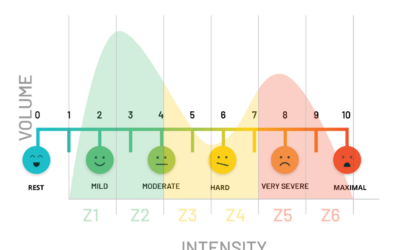
You’ve probably heard the theory that you should build a big base of volume in your training before you add speed. But, INTENSITY based approaches exist as well, and here we explore a common method in the track and field world that has built champions.
Exercise Physiology
Explore our Exercise Physiology articles archive for expert insights on exercise science, performance optimization, training strategies, and more.
Whether you’re an athlete, coach, or simply interested in improving your fitness, our articles offer practical tips and the latest research to help you understand and apply exercise physiology principles for better results.
Track Legend, Les Gramantik: Evolving Coaching Philosophy
Les Gramantik is a hall-of-fame inductee and as of 2024 he has attended 8 Olympics as a coach and 1 Olympics as an athlete. In this interview, we try to pull out all of the stories from his past, his training philosophies, and his humour.
Do I Need Lactate and VO2 Max Testing?
Lactate and VO2max testing are two popular methods used to assess the fitness and performance of runners. These tests provide valuable information that can help athletes understand their physiological capabilities and identify areas for improvement. Lactate testing measures the point at which lactate begins to accumulate in the muscles during exercise, known as the lactate threshold. VO2max testing, on the other hand, measures the maximum amount of oxygen that an athlete can consume during exercise.
A Critical Look at Full Body Electrical Muscle Stimulation (EMS) Training – Is the hype all wrong?
Our comprehensive guide provides insights into the effectiveness, safety, and potential risks of this unique workout method, helping you make an informed decision before trying it out.
Endurance Coach – Is it worth it?
What is Anaerobic Threshold? (+sample workouts!)
Exercise physiologists have long used thresholds as a way to measure transitions through exercise intensities, to quantify changes in fitness over time, and to evaluate metabolism in humans.
Often people refer to their “threshold” in the running world. But, as exercise physiologists, we know that there are actually at least two thresholds, the aerobic threshold and the anaerobic threshold, both with different purposes, physiologies, and work loads.
Dave Proctor’s Record-Breaking Run Across Canada – What does the physiology say?
How to test your fitness with the 20m shuttle run test. (All you need is 20m and your phone!)
How to improve your work capacity (Podcast bonus inside!)
What is Aerobic Threshold? (+ sample workouts!)
Most runners talk about their “threshold,” but did you know there are actually two—the aerobic threshold and the anaerobic threshold—each with distinct roles in performance? While the anaerobic threshold gets most of the attention, the aerobic threshold is just as critical for endurance, dictating how efficiently your body burns fuel and sustains effort over long distances.