

Introduction
There's a test that predicts cardiovascular disease, cognitive decline, all-cause mortality, and surgical recovery outcomes better than many of the markers your doctor routinely checks.
It takes about fifteen seconds. It requires no blood draw, no imaging, and no fasting.
It's a handshake.
Well - a measured one. Grip strength, assessed with a handheld dynamometer, has emerged as one of the most robust indicators of overall health and longevity in the research literature. A landmark study in The Lancet following over 140,000 people across 17 countries found that every 5 kg decrease in grip strength was associated with a 17% increased risk of cardiovascular death and a 16% increased risk of all-cause mortality.
That's not a minor correlation buried in a small study. That's a large, consistent signal across diverse populations.
And most people - even serious gym-goers - are doing almost nothing to specifically develop it.
After reading, if you still need help, you can contact us.

Why Grip Strength Is a Proxy for So Much
The connection between hand strength and overall health isn't random. It reflects a few things simultaneously.
First, grip strength is a reasonable proxy for overall musculoskeletal fitness. Strong hands tend to accompany a strong, active body. People who maintain grip strength across their lifespan tend to maintain muscle mass, bone density, and functional capacity in ways that translate directly to independence and quality of life in later decades.
Second, the forearm and hand contain a dense network of small muscles that are highly metabolically active and require consistent use to maintain. When grip strength declines, it often signals broader disuse - a kind of canary in the coal mine for the body's overall conditioning status.
Third, grip strength is associated with lean body mass and inversely related to measures of systemic inflammation - both factors that carry significant downstream health implications.
None of this means grip training alone is a health intervention. But it does mean that if you're serious about long-term performance and resilience, your hands and forearms deserve far more deliberate attention than they typically receive.
What "Grip Strength" Actually Means
Before getting into training, it's worth being precise about what we're talking about - because grip is not one thing.
Crush Grip: The force generated when closing the fingers against resistance. This is what most people think of when they think "grip strength" - squeezing a barbell, a handle, or a ball. Measured by a hand dynamometer.

Support Grip (Grip Endurance): The ability to sustain a crush grip over time. A single-rep max grip and a two-minute dead hang are both grip - but they're asking very different things from your hand. Endurance is a separate quality that requires separate training.
Pinch Grip: Force generated between the thumb and fingers without full hand closure. Relevant to climbing, manual work, racquet sports, and many daily tasks. Often undertrained because it's less obvious.

Extension Strength: The ability to open the hand against resistance - the antagonist to grip. We'll come back to this at length because it is almost universally neglected and directly connected to elbow health, wrist stability, and injury prevention.
Wrist Flexion and Extension Strength: The capacity to flex and extend the wrist under load. Not the same as grip, but deeply interrelated - and essential for pressing, pulling, and everything in between.
A complete grip training approach develops all of these qualities. Most gym programs develop one of them (crush grip, passively, through deadlifts and rows) and ignore the rest.
The Gap Between Incidental and Intentional Grip Training
This is worth being direct about: most gym training produces incidental grip development. You hold a bar, you hold dumbbells, you do pull-ups. Your grip gets some stimulus, and if you're a beginner, that may be enough.
At some point, it isn't. Your back, legs, and shoulders become significantly stronger than your forearms can support. Grip becomes the limiting factor in your lifts - the first thing to fail, the rate limiter on everything downstream. More seriously, the loading imbalance between the flexor-dominant grip pattern and the neglected extensors starts to manifest as elbow pain, wrist instability, and a forearm that can't maintain performance across a full training session.
Intentional grip training means programming specific work for the hands and forearms with the same logic you'd apply to any other structure: progressive overload, variation across grip types, adequate volume, and planned recovery.
How to Actually Train Grip Strength
Crush Grip
The most direct development comes from tools that provide a dedicated squeeze challenge - thick bar training, fat grips added to existing implements, or purpose-built grippers (the classic Captains of Crush style). These provide greater neural drive and muscular recruitment than a standard barbell because of the diameter - a thicker bar requires significantly more finger flexor activation to maintain.
If you don't have access to thick grips, towel pull-ups (looping a towel over a bar and gripping the towel) are a brutally effective bodyweight option.

Programming note: Treat crush grip work like any other strength quality. Sets of 3–6 with near-maximal resistance for strength; higher reps at submaximal loads for endurance. Don't train it to failure every session and every day - tendons and connective tissue need more recovery time than muscle. We like Daily Undulating Periodization for this reason for grip programming.
Grip Endurance
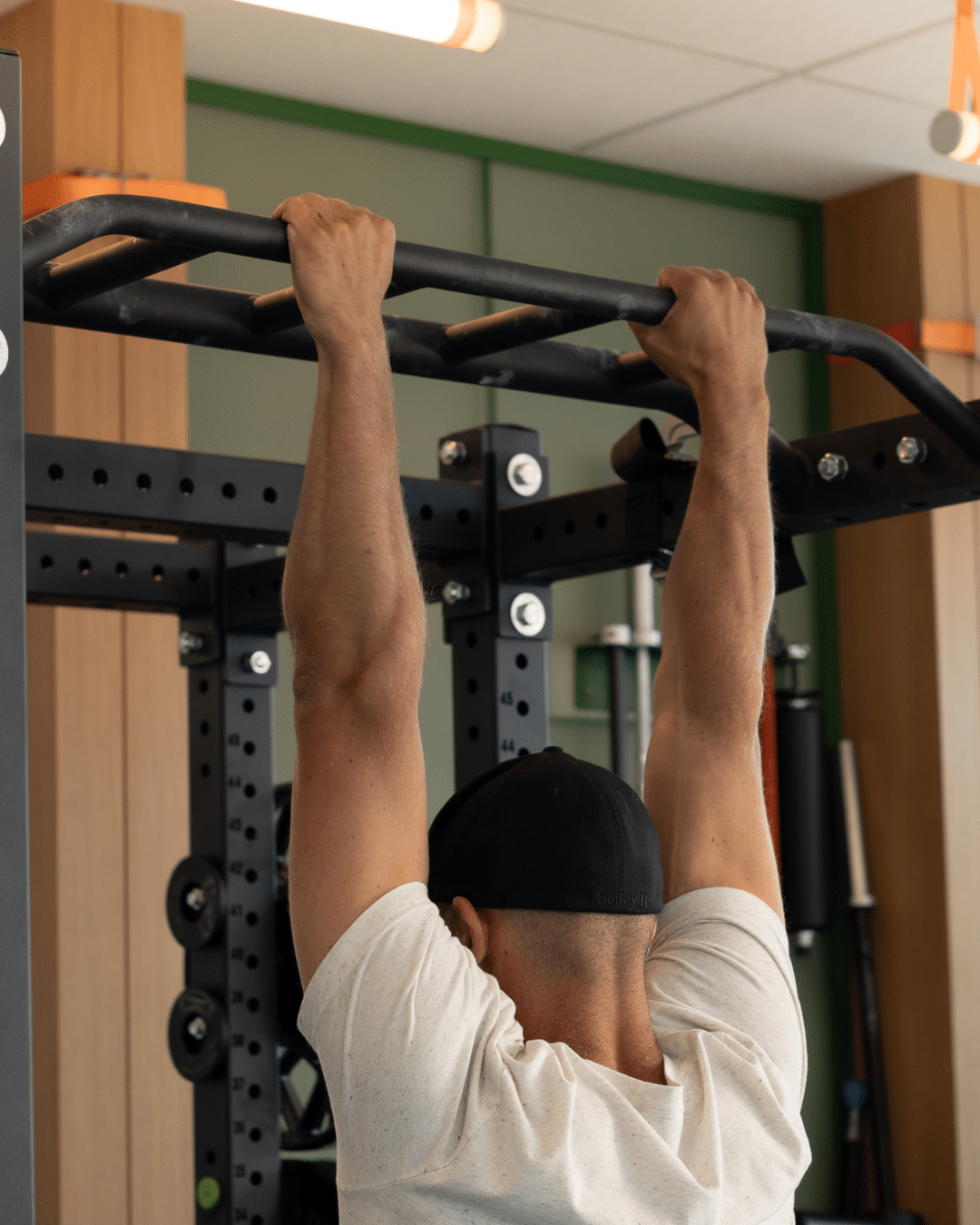
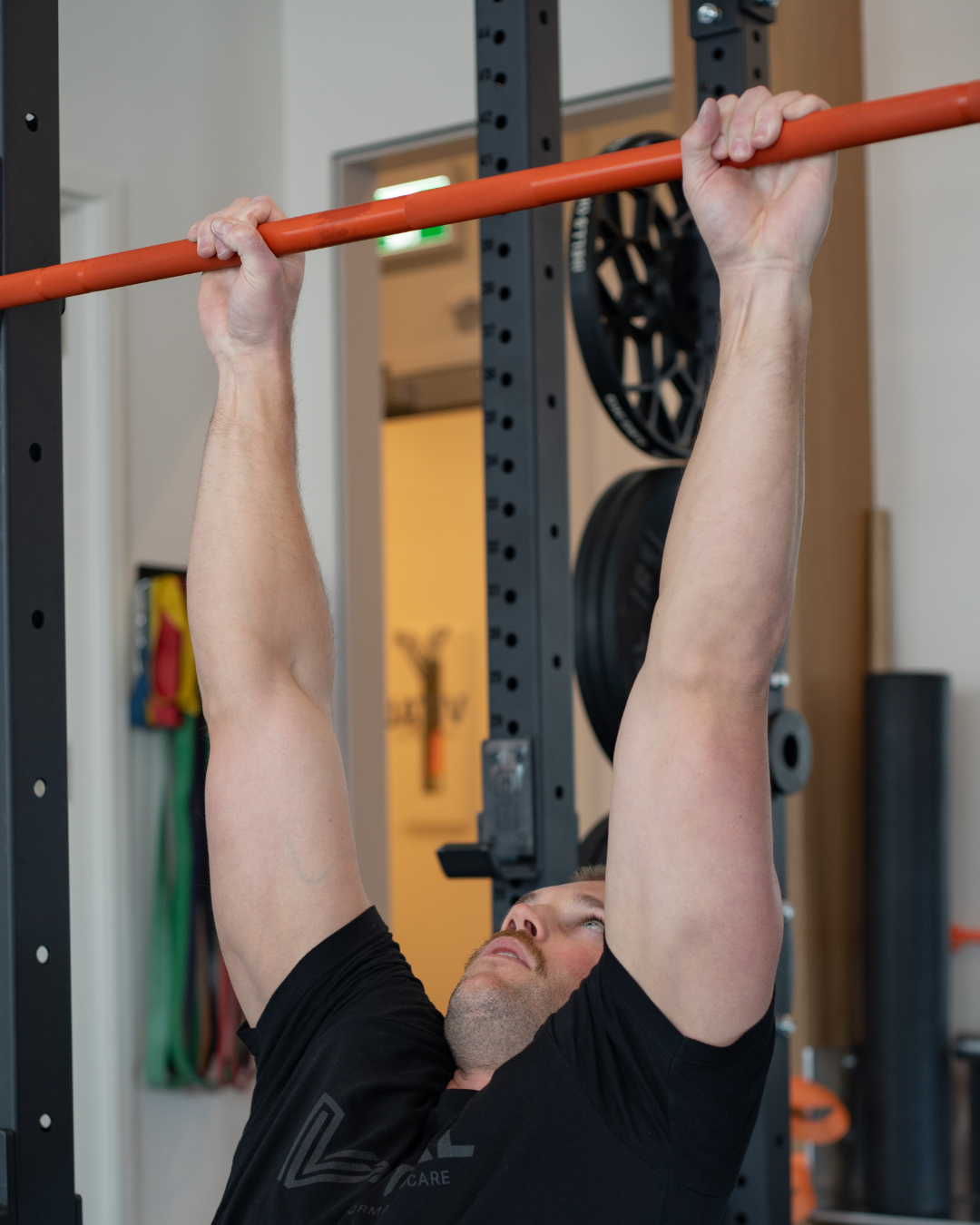
Dead hangs from a bar are underrated and underused. Hanging with full bodyweight, working up to 60-second holds and beyond, develops remarkable grip endurance while simultaneously decompressing the shoulder and improving scapular control. A win on multiple fronts.
Farmer carries - loaded walks with heavy implements - are equally valuable for endurance and have the added benefit of building shoulder stability, core bracing, and overall resilience under load. Start with something you can carry for 30–40 metres. Progress distance, weight, and grip variation over time (single-arm, offset, overhead).
Pinch Grip
Plate pinches - holding a weight plate between the thumb and fingers for timed holds - directly develop the thumb and finger pinch strength that farmers carries and barbell work don't touch. Start with a single 10 lb plate, progress to 25 lb and beyond. The grip sensation is uncomfortable at first; that discomfort is telling you something about how undertrained this quality is.
Wrist Flexion and Extension Strength
Wrist curls and reverse wrist curls are unfashionable. They're also exactly what most gymgoers need more of.
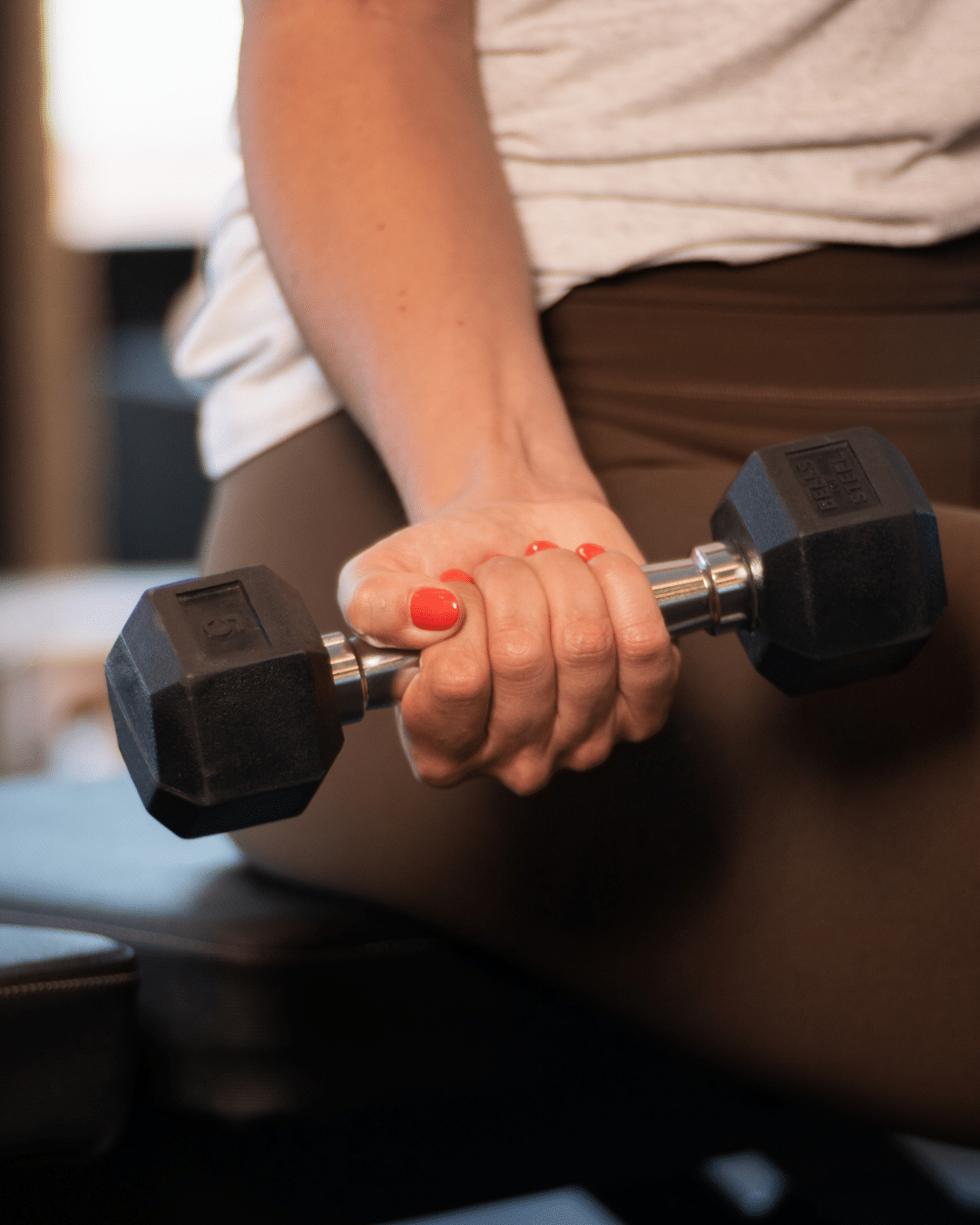
Seated wrist curls (palm up, working the flexors) and reverse wrist curls (palm down, working the extensors) loaded progressively over time build the forearm capacity that underpins everything. They're best done at the end of a session, 3–4 sets of 15–20 reps, with a focus on full range of motion and a controlled lowering phase.
If you're already dealing with elbow pain, the extensor loading component in particular deserves careful attention - and likely a more structured approach than general gym work will provide.
Grip Training and Injury Prevention
The research here is consistent: higher grip strength is associated with lower rates of upper extremity injury, faster return to sport after injury, and better surgical outcomes when injury does occur.
The mechanism makes sense. A strong, conditioned forearm handles unexpected loads - the stumble, the awkward catch, the failed rep - better than a weak one. The connective tissue is more robust, the tendons more resilient, the neuromuscular control more refined.
For people who've had elbow or wrist injuries, progressive grip training isn't just useful for performance, it's also protective. Building the forearm back up to full capacity is one of the clearest ways to reduce recurrence.
A Note on Frequency
Grip and forearm work is tolerant of relatively high frequency because the muscles involved are smaller and the loads used tend to be submaximal. Two to three sessions per week of direct grip work, alongside whatever grip demand your regular training creates, is a reasonable target.
The caveat: if you're coming off an elbow or wrist issue, or if your forearms are in a highly sensitized state, start lower and progress conservatively. The goal is consistent stimulus over time, not maximum discomfort per session.
The Long Game
Here's the frame that puts grip training in perspective: you are not just training for what you want to lift next year. You are training the structures that will determine what you're capable of in your 60s, 70s, and beyond.
Grip strength peaks in the mid-30s and declines progressively with age - unless you specifically work to maintain it. The people who keep their grip strength into later decades tend to keep their independence, their athleticism, and their resilience.
That's a powerful return on investment for some wrist curls and a set of dead hangs!
Ready to Build It Properly?
If you want a structured approach to hand and forearm strength - not just incidental grip development from your regular training - our Hand + Wrist Foundations program is built exactly for this. Progressive, evidence-based, and designed to close the gap between what your hands can currently handle and what you're asking of them.
Your grip is either an asset or a liability. It's worth deciding which.


More About The Author
Carla Robbins, Co-Founder of Vital Performance Care
Carla's journey into the world of endurance training, strength and conditioning, and exercise physiology began with her Undergraduate Degree in Exercise Physiology at the University of Calgary and continued into her graduation with a Master's in Exercise Physiology in 2016. Between working for the Canadian Sports Institute to the co-founding of Vital Performance Care, Carla is driven by a desire to find better ways to address complex cases in professional and everyday athletes and individuals.