A concussion can feel confusing and isolating. One moment you are playing sports, working, or going about your day. The next, you feel foggy, dizzy, exhausted, or unable to focus. For years, the standard advice was simple: rest in a dark room and wait it out. Today, the evidence tells a very different story.
At Vital Performance Care in Calgary, we take an evidence-based approach to concussion management — one grounded in the same principles championed by leading researchers and clinicians in the field. Recovery is not passive. It is active, structured, and personalized.
What Is a Concussion?
A concussion is a mild traumatic brain injury caused by a direct or indirect force to the head or body that disrupts normal brain function. It can happen during a sports collision, a fall, a motor vehicle accident, or a workplace incident — and it does not always require a direct blow to the head.
When a concussion occurs, the brain undergoes a temporary neurometabolic energy crisis. The brain suddenly demands more energy to heal, but its capacity to produce that energy is temporarily impaired. This mismatch is why mental and physical effort can feel so overwhelming in the early days — and why the old advice of “complete rest” often made things worse, not better.
Even when imaging tests like CT scans or MRIs appear normal, a concussion can still produce significant changes in how the brain processes information, controls balance, regulates heart rate, and coordinates vision.
Common Concussion Symptoms
Symptoms can appear immediately or develop hours after the injury. They affect multiple systems simultaneously, which is why concussion management requires a multimodal approach — not a single-symptom fix.
Physical Symptoms
- Persistent headaches or pressure in the head
- Dizziness or a spinning sensation (vertigo)
- Nausea
- Sensitivity to light and noise (photophobia and phonophobia)
- Balance and coordination problems
Cognitive and Emotional Symptoms
- Brain fog and difficulty concentrating
- Memory problems or slowed processing speed
- Irritability and mood changes
- Significant fatigue and disrupted sleep
When symptoms persist beyond four weeks in children, adolescents, or adults, this is referred to as persisting symptoms — previously called post-concussion syndrome. Early, active intervention is the most effective way to prevent this outcome.
The Evidence-Based Concussion Recovery Timeline
Every concussion is unique, but recovery consistently follows a progression when managed correctly. The current evidence is clear: early, active rehabilitation produces better outcomes than prolonged rest.
Stage 1: Relative Rest — The First 24 to 48 Hours
The first two days call for relative rest — reducing activities that significantly worsen symptoms. This does not mean total isolation in a dark room. Light movement around the house is encouraged. Complete rest beyond 48 hours has not been shown to speed recovery and may actually delay it.
Stage 2: Sub-Symptom Threshold Aerobic Exercise
This is one of the most important — and most misunderstood — stages of concussion recovery. Research led by Dr. John Leddy and supported by the 6th International Consensus Statement on Concussion in Sport demonstrates that guided sub-symptom threshold aerobic exercise, introduced as early as 5 to 10 days after injury, can reduce the risk of prolonged recovery by up to 50%.
Sub-symptom threshold exercise means exercising at a heart rate just below the level that provokes or worsens your symptoms. By working consistently at approximately 80% of your symptom threshold heart rate, you safely improve cerebral blood flow and help the autonomic nervous system recalibrate. This data-driven approach removes the fear of setbacks and provides a clear, measurable path back to your pre-injury level of function.
Stage 3: Active, Multimodal Rehabilitation
When symptoms persist beyond the first week, a structured, multimodal rehabilitation program becomes essential. At Vital Performance Care, our physiotherapists and chiropractors assess and address the specific systems driving your symptoms — rather than treating concussion as a single-system problem.
Vestibular Rehabilitation
Many of the most disabling concussion symptoms — dizziness, imbalance, visual disturbance, and motion sensitivity — originate from dysfunction in the vestibular system, the brain’s balance and spatial orientation network. When the vestibular system is disrupted by a concussion, the brain struggles to reconcile competing signals from the eyes, inner ear, and body.
Vestibular rehabilitation at Vital Performance Care retrains the brain to process these signals accurately. Targeted exercises include:
- Gaze stabilization — training the eyes to remain focused while the head moves
- Balance retraining — restoring stability across a range of surfaces and movement demands
- Visual tracking exercises — improving smooth, coordinated eye movement
Cervical Spine Treatment: The Often-Overlooked Component
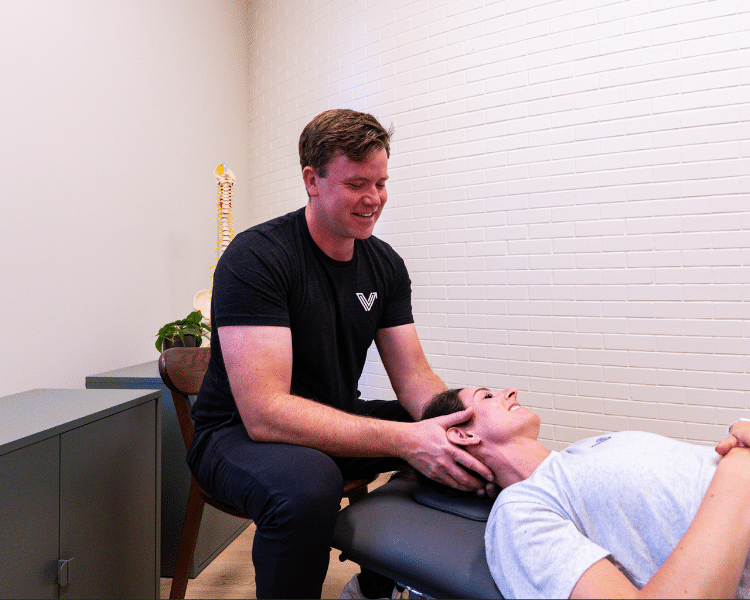
It is nearly impossible to sustain a concussion without also injuring the cervical spine. The force required to cause a brain injury far exceeds the force required to strain the muscles, joints, and ligaments of the neck. Cervical spine dysfunction can independently reproduce headaches, dizziness, and cognitive fog — making it essential to assess and treat alongside the brain injury itself.
Our cervical spine rehabilitation focuses on:
- Manual therapy, acupuncture/needling and soft tissue treatment to address neck pain and stiffness
- Restoring the sensorimotor connection between the eyes, neck, and brain
- Autonomic regulation — using graded exercise to return the nervous system to a calm, balanced state
Understanding Autonomic Dysfunction After Concussion
One of the most common and least understood barriers to recovery is autonomic dysfunction. After a head injury, the part of the nervous system that regulates heart rate, blood pressure, and circulation can become dysregulated. This explains why you might feel fine at rest but experience a rapid surge in symptoms the moment you walk up a flight of stairs, exercise, or engage in focused cognitive work.
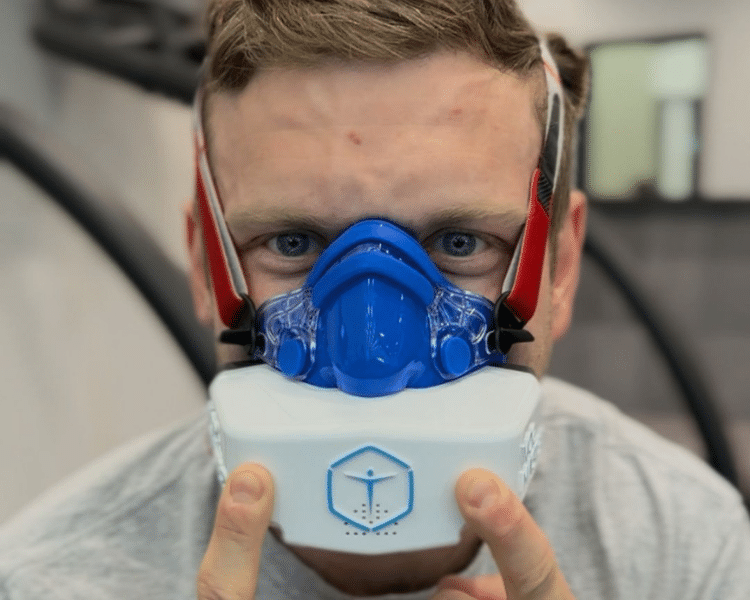
At Vital Performance Care, we use individualized exercise testing to identify your symptom threshold and prescribe a precise aerobic rehabilitation program. This removes the guesswork, avoids symptom exacerbation, and builds a measurable, progressive return to your pre-injury fitness levels.
Return to Sport, Work, and Life
At Vital Performance Care, we guide our athletes and active patients through a structured Return to Sport protocol aligned with current international consensus guidelines. The goal is not simply to be symptom-free at rest — it is to ensure the brain can meet the full cognitive, physical, and sensory demands of your sport or profession without symptom recurrence.
The return-to-sport progression includes:
- Symptom-limited daily activity
- Light aerobic exercise at sub-symptom threshold (walking, stationary cycling)
- Sport-specific exercise (running patterns, skating drills)
- Non-contact training drills
- Full-contact practice following medical clearance
- Return to full competition
For patients returning to cognitively demanding workplaces or academic environments, we follow a concurrent Return to Learn / Return to Work framework — recognizing that the brain’s recovery must support performance across all domains of life, not just the athletic field.
When to Seek Concussion Assessment in Calgary
Early intervention is the single most effective way to prevent persisting symptoms. You should seek a professional assessment if:
- Symptoms persist beyond 10 to 14 days
- You are experiencing ongoing dizziness, imbalance, or visual disturbance
- Returning to work, school, or sport feels unmanageable
- Headaches are not improving, or worsen with physical or cognitive activity
Do not wait for symptoms to resolve on their own. Research consistently shows that the window between injury and the start of active rehabilitation matters — and that patients who receive structured, evidence-based care earlier recover faster and more completely.
Move From Injury to Full Performance
At Vital Performance Care in Calgary, our approach to concussion care is built on the same evidence that drives the world’s leading concussion clinics. We combine vestibular rehabilitation, cervical spine treatment, sub-symptom threshold exercise therapy, and individualized return-to-sport programming to get you back to what matters most — safely, efficiently, and completely.
If you are experiencing concussion symptoms, a comprehensive assessment is your first step. We will provide the structure, the expertise, and the clear roadmap you need to heal.

More About The Author
Carla Robbins, Co-Founder of Vital Performance Care
Carla’s journey into the world of endurance training, strength and conditioning, and exercise physiology began with her Undergraduate Degree in Exercise Physiology at the University of Calgary and continued into her graduation with a Master’s in Exercise Physiology in 2016. Between working for the Canadian Sports Institute to the creation of her company Vital Strength and Physiology Inc (now Vital Performance Care), Carla is driven by a desire to find better ways to address complex cases in professional and everyday athletes and individuals.