Introduction
If you've been told to stop deadlifting after a disc herniation — or if your first instinct after a diagnosis was to avoid the gym entirely — you're far from alone. For decades, the conventional wisdom was simple: injured back means no lifting, rest until healed, and treat the spine as fragile. At Vital Performance Care in Calgary, this is a question we hear from clients regularly, and we believe the answer matters enormously for how you train, recover, and build long-term resilience.
The research tells a more nuanced story. A growing body of evidence suggests that not only can many people with disc herniations safely return to deadlifting, but that appropriately loaded hip-hinge movements may actually support recovery. At the same time, technique matters: poor mechanics and excessive spinal flexion under load are genuine risk factors that warrant attention. The goal of this review is to replace fear with understanding — and uncertainty with a clear, evidence-based path forward.
This article synthesizes current research on disc anatomy, injury mechanisms, deadlift biomechanics, and rehabilitation. It is written to be accessible to anyone who has experienced a disc herniation, not just clinicians. Where technical terms are introduced, plain-English explanations are provided.
1. Understanding Intervertebral Disc Herniations
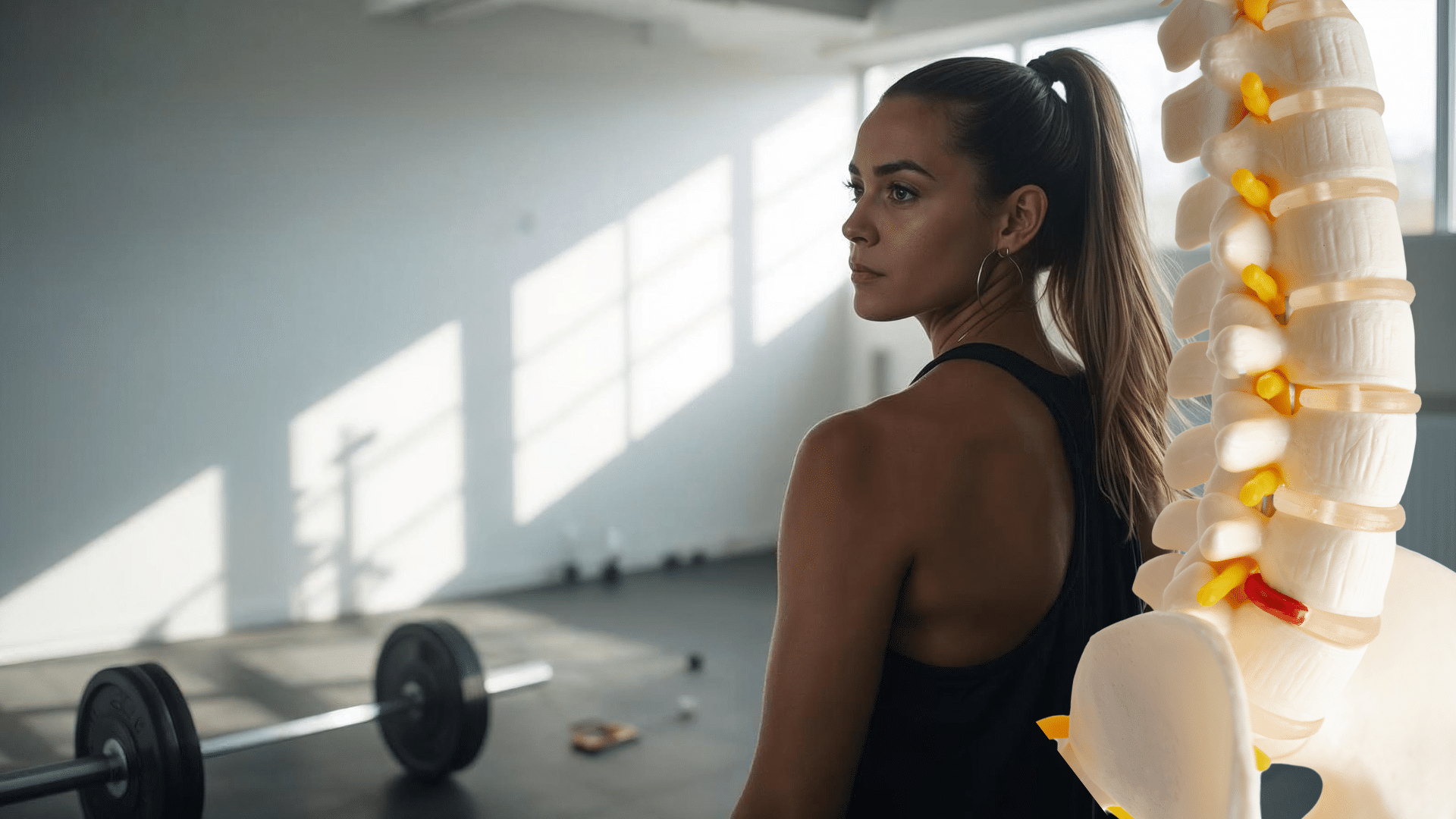
The spine is made up of 24 vertebrae [the individual bones of your spine], stacked on top of each other and separated by intervertebral discs [cushioning pads that act as shock absorbers and allow movement]. Each disc has two main components: a tough outer ring called the annulus fibrosus [think of it like layers of a car tire], and a soft, gel-like center called the nucleus pulposus [the pressurized fluid core that distributes load].
A disc herniation occurs when the gel-like nucleus pushes through a tear or weak spot in the outer annular ring. Depending on how far the material has moved, herniations are classified as protrusions [the disc bulges but the outer layer is still intact], extrusions [nucleus material pushes fully through the outer ring], or sequestrations [a fragment of the disc breaks off entirely]. The most common levels affected are L4–L5 and L5–S1 [the lowest two segments of the lumbar spine], which bear the greatest mechanical load.
One of the most important and under-communicated facts about disc herniations is their natural history [what typically happens over time without surgery]. Research consistently shows that the majority of herniations — even large ones — undergo resorption [the body gradually breaks down and absorbs the herniated disc material] over 12–18 months. A landmark systematic review by Chiu et al. (2015) found spontaneous resorption rates of 66–82% depending on herniation type, with complete disappearance occurring in up to 43% of extrusions. This is extraordinarily good news for most people with a new diagnosis.
Importantly, the degree of herniation on an MRI does not always correlate with the severity of symptoms. Many people walk around with large herniations and no pain at all. Conversely, small herniations can cause significant symptoms. This disconnect between imaging findings and clinical presentation [what you actually feel and experience] is well-documented and is a key reason why MRI alone should not dictate treatment decisions.
2. How Disc Herniations Happen: Mechanical Insights
Understanding how discs herniate helps us understand how to protect them — and, critically, what movements are and aren't risky in the context of rehabilitation.
The Role of Flexion and Surprise Loading
Much of what we know about disc injury mechanics comes from cadaveric research conducted by Dr. Stuart McGill at the University of Waterloo and replicated by other labs. This work shows that repeated spinal flexion [rounding the lower back] under compressive load is the primary mechanism of progressive disc failure. When the lumbar spine [lower back] is flexed under load, the nucleus pulposus [the gel center] is displaced posteriorly [pushed toward the back of the disc], increasing pressure on the posterior annulus [the back wall of the disc]. Over many repetitions — a process called cyclic loading — tiny cracks develop and spread, eventually allowing herniation.
Equally important is the role of surprise loading [unexpected forces applied to the spine without time to activate stabilizing muscles]. Research by Adams & Hutton and others has shown that unprepared, reflexive loading — not maximal intentional effort — is disproportionately damaging. This partly explains why back injuries often occur during mundane activities like picking up a light object, not necessarily during heavy barbell work where the muscles are consciously pre-activated.
Complex Loading: Flexion + Rotation + Compression
The most injurious disc loading pattern combines flexion [forward bending] with axial rotation [twisting] and compressive load simultaneously. This combined loading profile creates the highest intradiscal pressures [pressure inside the disc] and tears in the annular lamellae [the layers of the outer disc wall]. While a single event can cause herniation, cumulative microtrauma [small, repeated stresses that build up over time] over weeks, months, or years is a more common pathway — particularly in people who sit for prolonged periods, perform repetitive bending tasks at work, or have chronically poor postural habits.
The Fear-Avoidance Trap: Old Thinking vs. New Science
For much of the 20th century, low back pain was managed with a biomedical model: find the structural damage, fix the structure, pain resolves. Rest, immobilization, and activity avoidance were the go-to prescriptions. This approach not only failed many patients — it actively made some of them worse.
Modern pain science has shifted toward a biopsychosocial model [a framework that recognizes pain is shaped not only by tissue damage, but by psychological factors like fear and catastrophizing, and social factors like work stress, isolation, and health beliefs]. One of the most clinically significant findings from this model is the fear-avoidance cycle: when pain leads to fear, fear leads to avoidance, avoidance leads to deconditioning [loss of strength and movement capacity] and hypervigilance [the nervous system becoming over-sensitized], and these factors drive ongoing pain — even after the original injury has healed.
The hip hinge — the fundamental movement pattern of a deadlift, where you push your hips back and bend at the waist while maintaining a neutral spine — is not an exotic gym movement. It is the natural mechanics of every time you pick something up off the floor, load groceries into a car, lift a child, or grab something from a low shelf. Avoiding this movement pattern entirely doesn't protect the spine; it creates movement deficits, weakens the posterior chain [the muscles of your glutes, hamstrings, and back], and reinforces fear.
Research consistently shows that patients who are kept active and gradually reloaded after disc herniation have better outcomes — less pain, better function, and lower recurrence rates — compared to those who rest and avoid activity. The key word is "gradually." Progressive loading, starting within tolerable pain limits, is the evidence-based standard of care.
Figure: The pain web — a network of biological, psychological, and social factors that interact to influence pain experience and recovery. [Source: Adapted from Carr & Bradshaw, 2014 / biopsychosocial pain model literature]
The diagram above illustrates the complexity of the pain experience. Pain is not simply a signal from damaged tissue — it is constructed by the brain based on many inputs, including perceived threat, beliefs about movement, emotional state, and social context. This is why two people can have identical MRI findings with vastly different pain experiences, and why addressing fear and avoidance is often as important as physical rehabilitation.
3. Deadlift Biomechanics and Spinal Loading
A common concern is that the deadlift places dangerous loads on the lumbar spine. Biomechanical research confirms that heavy deadlifts do generate substantial spinal loads — but context is everything. High force does not automatically mean high risk, particularly when the musculature [muscles surrounding the spine] is strong and well-coordinated.
Spinal Loads During Heavy Deadlifts
Classic biomechanical studies by Cholewicki et al. (1991) estimated compressive forces at the L4–L5 [fourth and fifth lumbar vertebrae — a common herniation site] level during heavy deadlifts in the range of 14,000–17,000 N [roughly 1.4–1.7 tonnes of compressive force]. While this sounds alarming, cadaveric failure loads for healthy vertebral endplates [the top and bottom surfaces of each vertebra where load is transmitted to the disc] are in the range of 10,000–13,000 N for middle-aged spines — yet elite powerlifters regularly survive these loads.
The resolution of this apparent paradox lies in the role of the erector spinae and multifidus [the deep muscle columns that run alongside the spine] in creating intra-abdominal pressure [pressure within the abdominal cavity that acts like an internal airbag, reducing spinal loading] and co-contraction [muscles on both sides of the spine activating together to create stiffness and stability]. The spine is not a passive column — it is an actively stabilized structure that becomes significantly stronger when the surrounding muscles are trained and co-ordinated.
Load-Dependent Changes in Spinal Posture
Research by Hales et al. and others shows that lumbar posture [the curve in your lower back] changes predictably with increasing load. As weight increases, even well-trained lifters tend to demonstrate some degree of lumbar flexion [rounding] — particularly at lockout in the conventional deadlift. Critically, research by Cholewicki & McGill suggests that a small amount of lumbar flexion under controlled loading may be tolerated by a conditioned spine, whereas the same posture under fatigue or surprise loading is more problematic. This reinforces the importance of training technique progressively and staying within the limits of technical proficiency.
Sex Differences in Spinal Alignment
Research on sex differences in deadlift biomechanics shows that females often demonstrate less lumbar flexion during the deadlift compared to males at equivalent relative loads, potentially due to differences in pelvis morphology [the shape and orientation of the pelvis], hip socket depth, and femoral length [the length of the thigh bone]. These differences have implications for stance width, grip position, and the choice between conventional and sumo deadlift variations. Individualization of technique based on anatomy is an important clinical consideration.
Fatigue and Lumbo-Pelvic Coordination
As sets progress and fatigue accumulates, research consistently shows degradation in lumbo-pelvic coordination [the coordinated movement between the lumbar spine and pelvis during the lift]. This manifests as early posterior pelvic tilt [the pelvis rotating backward, which reduces the natural lumbar curve and increases disc shear forces] and reduced erector spinae activation. Managing training volume [total workload] and intensity appropriately — avoiding excessive fatigue in early rehabilitation — is therefore not just a performance consideration but a safety one.
The Role of Technique: Why Form Matters — and Why You Need Help Getting It Right
The research is clear: lifting with poor form, and allowing excessive spinal flexion during the deadlift, increases the risk of disc loading in patterns associated with injury. Specifically, a flexion-biased deadlift — where the lower back rounds significantly during the pull — places the posterior annulus [back wall of the disc] under repeated tensile stress [stretching forces] that, over time, can propagate existing tears or create new ones. For someone with an existing herniation, this is a meaningful risk that must be managed.
What does good technique look like? A safe deadlift setup typically involves: a neutral lumbar spine [maintaining the natural inward curve of the lower back, not excessively arched or rounded], a braced core [360-degree tension around the midsection before the bar leaves the floor], bar proximity to the body throughout the lift [keeping the weight close to the centre of mass reduces the moment arm and therefore the spinal loading], and a hip-hinge initiation [leading with the hips back rather than squatting the weight up].
However — and this is critical — good technique is not simply a matter of watching a YouTube video and copying the form. The human body adapts, compensates, and develops habitual movement patterns over years. Someone returning to deadlifting after a disc herniation may have altered movement patterns, pain-avoidance compensations [unconscious changes in how you move to protect an area that has been painful], and reduced neuromuscular control [the brain-muscle communication that coordinates movement] that they're not even aware of.
| This is why we believe strongly at Vital Performance Care that returning to deadlifting (also known as hip hinging..) after a back injury should be supervised by a trained exercise physiologist, physiotherapist, kinesiologist, or personal trainer with specific expertise in injury rehabilitation and strength training. An experienced eye can identify form breakdowns that a mirror cannot, and a progressive program can be tailored to your specific anatomy, injury history, and movement patterns. Not sure who's the right fit for you? Contact us at vitalperformancecare.com/contact — our team works collaboratively to match you with the practitioner best suited to your goals. |
4. Deadlift Variations and Spinal Considerations
Not all deadlifts are created equal from a spinal loading perspective. The choice of variation should be guided by individual anatomy, injury history, and rehabilitation stage.
- Conventional deadlift: The conventional deadlift, performed with a hip-width stance and hands outside the legs, generates the highest lumbar extensor moments [the forces your lower back muscles must resist to keep the spine from rounding] of all variations due to the greater horizontal distance between the bar and the hip joint.
- Sumo deadlift: The sumo deadlift, with a wide stance and hands inside the legs, reduces the lumbar flexion moment and trunk lean [how far forward the torso tips], potentially making it a better starting point for individuals with central disc herniations sensitive to lumbar extension loading.
- Trap bar deadlift: Trap bar (hex bar) deadlifts allow the load to sit at the lifter's centre of mass rather than in front of it, meaningfully reducing the lumbar flexion moment while still training the posterior chain. Research by Camara et al. (2016) found trap bar deadlifts produced lower peak lumbar forces while maintaining similar muscle activation to conventional deadlifts. This makes the trap bar variation a commonly recommended starting point in early rehabilitation.
- Romanian deadlift (RDL): The Romanian deadlift (RDL) emphasizes the eccentric [lengthening] component of the hamstrings with less range of motion at the bottom, reducing disc compression at end-range. Often used in mid-rehabilitation to build posterior chain strength with less compressive load than a full conventional pull.
The progression from trap bar → RDL → sumo/conventional is a common clinical pathway, with variation selection guided by symptom response and technical proficiency at each stage.
5. What Happens in an Already-Herniated Disc?
A common misconception is that once a disc has herniated, it is permanently damaged and will always be vulnerable. The evidence suggests a more dynamic picture. As noted in Section 1, the majority of herniations undergo spontaneous resorption. The process is driven primarily by an inflammatory and phagocytic response [immune cells that "eat" the herniated tissue, recognizing it as foreign material outside the disc space].
Interestingly, larger herniations — particularly extrusions and sequestrations — have been shown to resorb at higher rates than protrusions, likely because they are more exposed to the vascular and immune environment of the epidural space [the space around the spinal cord and nerve roots]. This is counterintuitive: a more severe-looking herniation on imaging may actually have a better natural prognosis than a contained bulge.
Research by Autio et al. (2006) and others shows that inflammatory cytokines [chemical messengers that drive the immune response], particularly TNF-α [Tumour Necrosis Factor-alpha — a key inflammatory protein], play a central role in the resorption process. This means that aggressive anti-inflammatory strategies (including prolonged NSAID use [non-steroidal anti-inflammatory drugs like ibuprofen]) during the acute phase may theoretically delay this natural healing process, though the clinical significance of this in humans remains an active area of research.
For the person returning to loading: the dynamic nature of disc herniation supports a gradually progressive approach rather than indefinite avoidance. The spine is remarkably adaptable [capable of changing structure and function in response to load]. Loading within tolerable limits appears to support disc health rather than undermine it.
6. Long-Term Effects of Heavy Lifting on Disc Health
If heavy lifting were consistently damaging to spinal discs, we would expect to see higher rates of disc degeneration [age-related wearing down of disc structure] in populations who have lifted heavy for decades. The evidence does not support this prediction.
Research comparing elite powerlifters [athletes who regularly perform maximum or near-maximum deadlifts, squats, and bench presses] with age-matched sedentary controls has found that powerlifters often have thicker, better-hydrated discs with lower rates of degeneration. A study by Videman et al. found that while specific loading patterns influenced disc morphology [shape], heavy compressive loading in the context of a well-trained posterior chain did not accelerate degeneration relative to non-loading.
A critical caveat: these findings apply to well-trained lifters who have progressively built capacity over time. They should not be interpreted as "heavy deadlifting is always safe." Rather, they suggest that the spine, when given time to adapt, can tolerate substantial compressive loads — and that strength training may actually be protective against the disc degeneration associated with sedentary aging.
7. The Deadlift as Rehabilitation: A Therapeutic Tool?
Deadlifts for Low Back Pain
Several clinical trials have investigated the use of deadlifts as a direct therapeutic intervention for low back pain. A randomized controlled trial by Berglund et al. (2015) found that motor control exercises [movements designed to improve neuromuscular coordination of the spine and hips] including deadlifts produced comparable pain reduction and superior functional improvement compared to traditional general exercise. Patients in the deadlift group also showed greater improvements in hip extensor strength [the power of your glutes and hamstrings, which are the primary muscles in a deadlift] at follow-up.
A subsequent study by Aasa et al. (2015) specifically examined low-load deadlifts as a rehabilitation tool for patients with low back pain, finding clinically significant reductions in pain and disability scores with a well-supervised, progressive protocol. The key operative principle was gradualism [starting very light and progressing systematically] and technical fidelity [strict attention to form throughout].
Deadlifts as Assessment in Acute Low Back Pain
Clinicians have also explored the use of the deadlift as an assessment tool. The ability to perform a hip hinge with controlled technique provides real-time information about neuromuscular control, symptom provocation [whether the movement produces pain, and at what point in the range of motion], and fear-avoidance behavior. Patients who refuse to attempt any forward flexion due to fear often benefit from having that fear systematically addressed as part of a pain education and graded exposure program [a structured approach to gradually re-introducing feared movements in a safe and supported environment].
Phased Rehabilitation Approach
A well-structured rehabilitation program following disc herniation typically progresses through four phases, each building on the previous:
- Phase 1 — Education & Calm the System: Pain education and acute symptom management. Understanding why pain does not equal damage, reducing fear-avoidance, gentle movement, and breathwork to restore intra-abdominal pressure control.
- Phase 2 — Motor Control & Movement Restoration: Restoring lumbopelvic motor control [coordinated movement of the spine, pelvis, and hips] through low-load exercises: bird-dogs, dead bugs, glute bridges. Introduction of the hip hinge pattern with bodyweight or minimal load.
- Phase 3 — Strength Development: Progressive loading of the posterior chain using trap bar deadlifts, RDLs, hip thrusts, and back extensions. Load progressed systematically based on technique and symptom response.
- Phase 4 — Performance & Return to Activity: Return to sport-specific or occupation-specific demands including, where appropriate, conventional or sumo deadlifts at significant loads.
The Vital Performance Care Clinical Approach
Training Within a Tolerable Pain Window
One of the most clinically important — and practically useful — concepts in rehabilitation is the distinction between painful and harmful. Not all pain signals damage; in fact, a degree of discomfort during rehabilitation is normal, expected, and often associated with better outcomes than pain-free exercise alone.
At Vital Performance Care, our practitioners guide clients using the Numeric Pain Rating Scale (NPRS) [a simple 0–10 scale where 0 = no pain and 10 = worst imaginable pain] to monitor and manage load during each session. Research supports a working guideline of training within the 0–5 range on this scale during rehabilitation loading:
Figure: The Numeric Pain Rating Scale (NPRS) used to guide loading in rehabilitation. A pain level of 0–5 during exercise is generally considered tolerable and acceptable; above 5 warrants load reduction or modification.
- Pain that stays at or below 5/10 during the exercise is generally well-tolerated and does not indicate tissue damage.
- Pain that returns to baseline levels within 24 hours after exercise is a positive sign that the load was appropriate.
- Pain above 5/10, or pain that is significantly elevated the next day, suggests the load should be reduced before the next session.
- The goal is progressive, systematic capacity-building — not pushing through pain.
Figure 2: Simulation modelling showing the relative contribution of different biopsychosocial factors to low back pain outcomes. Addressing multiple factors simultaneously produces disproportionately better outcomes than targeting any single factor in isolation.
It's Rarely Just About the Deadlift
Here's something important that often gets overlooked in disc herniation rehabilitation: for most clients working with us at Vital Performance Care, the heavy conventional deadlift is not the primary training modality — particularly in the early and mid phases of recovery. It is one tool among many.
A well-rounded rehabilitation and performance program uses multiple movement categories to build capacity across the entire musculoskeletal system, reduce the risk of any single pattern being overloaded, and develop the balanced strength that protects the spine long-term:
- Hip hinge: Trap bar deadlifts, Romanian deadlifts, hip-hinge machine work
- Squat pattern: Goblet squats, split squats, leg press
- Hip thrust: Hip thrusts, glute bridges
- Direct posterior chain (back extensions): Glute-ham raises (GHRs), back extensions, reverse hypers
- Upper body push: Push-ups, chest press, shoulder press
- Upper body pull: Rows, lat pulldowns, face pulls
- Core rotation: Cable chops, woodchops, med ball rotations
- Anti-rotation: Pallof press, half-kneeling resistance
- Anti-extension (core stiffness): Planks, ab wheel rollouts, hollow holds
- Spinal extension: Supermans, prone back extensions
- Spinal flexion / mobility: Jefferson curls, cat-cow, seated forward fold — gentle spinal mobility work appropriate for later stages
This balanced approach ensures that no single movement pattern dominates, that strength is developed through multiple planes of motion, and that the spine is supported by a capable, resilient system — not dependent on any one lift to function.
A Real-World Case: Brian Carroll and Return to Heavy Deadlifting
One of the most compelling documented cases of returning to high-level deadlifting after severe spinal injury is that of Brian Carroll — a powerlifting world record holder who suffered a career-threatening compression fracture [a crush injury to a vertebral body] and multiple disc injuries that left him barely able to walk. Under the guidance of Dr. Stuart McGill, Carroll underwent a meticulously structured rehabilitation program that emphasized restoring spinal stability before progressively reloading.
Carroll documented his journey in his book 'Gift of Injury' (co-authored with McGill), which has become a widely read reference in strength training and rehabilitation communities. He returned not only to competition-level lifting, but to pulling over 400 kg in training. While his case is an extreme example — and most people recovering from a disc herniation are not pursuing elite powerlifting — the principles are universal: stability first, progressive load second, patience throughout.
His story is not presented here as evidence that everyone can or should return to heavy lifting — but as a demonstration that even severe spinal injuries can, with the right guidance, lead to a full return to meaningful activity.
Practical Principles
Synthesizing the research reviewed above, the following principles represent a sound, evidence-informed approach to deadlifting with a disc herniation:
- Most disc herniations resolve on their own within 12–18 months. A herniation on an MRI is not a life sentence.
- Fear-avoidance and prolonged inactivity are associated with worse outcomes than appropriately progressive loading.
- The hip hinge is a fundamental human movement pattern. Avoiding it entirely does not protect the spine — it deconditions it.
- Spinal flexion under compressive load is the primary mechanism of disc injury. Maintaining neutral lumbar posture during loaded hip hinges is clinically important.
- Technique must be learned and supervised, particularly in early rehabilitation. Do not self-coach a return to deadlifting after a back injury.
- The trap bar deadlift and Romanian deadlift are valuable early-stage variations that reduce lumbar demand while building posterior chain strength.
- Training within a 0–5/10 pain window during rehabilitation is generally safe and appropriate. Persistent elevation of pain (above 5/10 during exercise, or significantly elevated the following day) warrants load reduction.
- A balanced program — including hip hinge, squat, hip thrust, direct back work, push, pull, core stability, and mobility — produces better outcomes than focusing exclusively on any single lift.
- Progress is non-linear. Flare-ups are normal and do not mean the rehabilitation is failing. They are information, not catastrophe.
Conclusion
The question "can I deadlift with a disc herniation?" does not have a simple yes or no answer — but the research strongly suggests that for most people, the answer is eventually yes, with the right guidance. The spine is an adaptable, resilient structure that responds well to progressive loading when the process is informed by biomechanics, pain science, and individual assessment.
What is required is not courage to "push through" — it's patience, appropriate supervision, and a willingness to work within your body's current capacity while building toward greater capacity over time. That is exactly what a skilled practitioner can help you do. The goal is not just to deadlift — it's to move well, live actively, and build a body that serves you for the long term.
| Ready to Lift with Confidence?At Vital Performance Care in Calgary, our collaborative team of practitioners — including exercise physiologists, physiotherapists, and kinesiologists with specific expertise in strength training and injury rehabilitation — works with you to build a program that's individualized to your injury history, movement patterns, and goals.
Not sure who's the right fit for you? We'll help you figure that out. Contact us to find out which member of our team is best suited to your needs. Book a consultation → vitalperformancecare.com/contact |
Disclaimer
This article is intended for educational purposes only and does not constitute medical advice. The information presented here is based on a review of published research and is not a substitute for individualized assessment by a qualified healthcare professional. If you are experiencing back pain, disc herniation symptoms, or any musculoskeletal condition, please consult with a licensed healthcare practitioner — like the team at Vital Performance Care in Calgary — before beginning or modifying any exercise program. Individual circumstances vary; what is appropriate for one person may not be appropriate for another.
Author Bio - Add from Word Press
Carla Robbins
References
Aasa, B., Berglund, L., Michaelson, P., & Aasa, U. (2015). Individualized low-load motor control exercises and education versus a high-load lifting exercise and education to improve activity, pain intensity, and physical performance in patients with low back pain: a randomized controlled trial. Journal of Orthopaedic & Sports Physical Therapy, 45(2), 77–85.
Adams, M. A., & Hutton, W. C. (1982). Prolapsed intervertebral disc: a hyperflexion injury. Spine, 7(3), 184–191.
Autio, R. A., Karppinen, J., Niinimäki, J., Ojala, R., Kurunlahti, M., Haapea, M., & Tervonen, O. (2006). Determinants of spontaneous resorption of intervertebral disc herniations. Spine, 31(11), 1247–1252.
Berglund, L., Aasa, B., Hellqvist, J., Michaelson, P., & Aasa, U. (2015). Which patients with low back pain benefit from deadlift training? Journal of Strength and Conditioning Research, 29(7), 1803–1811.
Camara, K. D., Coburn, J. W., Dunnick, D. D., Brown, L. E., Galpin, A. J., & Costa, P. B. (2016). An examination of muscle activation and power characteristics while performing the deadlift exercise with straight and hexagonal barbells. Journal of Strength and Conditioning Research, 30(5), 1183–1188.
Carroll, B., & McGill, S. (2018). Gift of Injury: The Strength Athlete's Guide to Recovering from Back Injury and Winning Again. BackFitPro Inc.
Chiu, C. C., Chuang, T. Y., Chang, K. H., Wu, C. H., Lin, P. W., & Hsu, W. Y. (2015). The probability of spontaneous regression of lumbar herniated disc: a systematic review. Clinical Rehabilitation, 29(2), 184–195.
Cholewicki, J., McGill, S. M., & Norman, R. W. (1991). Lumbar spine loads during the lifting of extremely heavy weights. Medicine and Science in Sports and Exercise, 23(10), 1179–1186.
Hales, M. E., Johnson, B. F., & Johnson, J. T. (2009). Kinematic analysis of the powerlifting style squat and the conventional deadlift during competition: is there a cross-over effect between lifts? Journal of Strength and Conditioning Research, 23(9), 2574–2580.
McGill, S. M. (2007). Low Back Disorders: Evidence-Based Prevention and Rehabilitation (2nd ed.). Human Kinetics.
Videman, T., Battié, M. C., Gibbons, L. E., Gill, K., Fisher, L. D., & Manninen, H. (1997). Lifetime exercise and disk degeneration: an MRI study of monozygotic twins. Medicine and Science in Sports and Exercise, 29(10), 1350–1356.

More About The Author
Carla Robbins, Co-Founder of Vital Performance Care
Carla's journey into the world of endurance training, strength and conditioning, and exercise physiology began with her Undergraduate Degree in Exercise Physiology at the University of Calgary and continued into her graduation with a Master's in Exercise Physiology in 2016. Between working for the Canadian Sports Institute to the creation of her company Vital Strength and Physiology Inc (now Vital Performance Care), Carla is driven by a desire to find better ways to address complex cases in professional and everyday athletes and individuals.